Pharynx / Larynx

Pharynx

  1. Musculofascial tube
  2. Incomplete anteriorly
  3. Extends from base of skull to the oesophagus
  4. Components
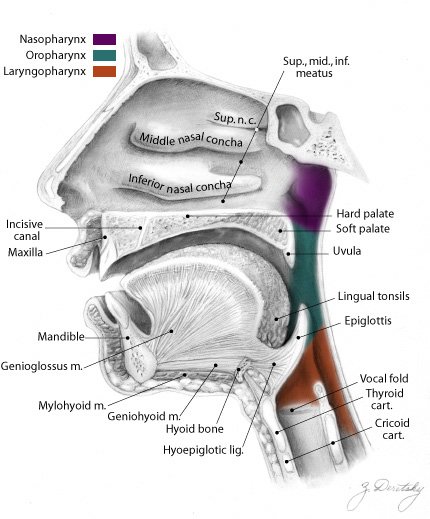
    • Nasopharynx: lying behind nasal fossae and above soft palate
    • Oropharynx: behind anterior pillars of the fauces
    • Laryngopharynx: lying behind the larynx


Region
Important Structures Clinical relevance
Nasopharynx
  • Lies above soft palate (cut off from rest of pharynx during deglutition)
  • Adenoid (nasopharyngeal tonsils) - forms waldeyer's ring with palatine tonsils, tongue lymph nodes
  • Orifice of eustachian tube lies on canal on side-wall of nasopharynx
  • Eustachian tube = route of potential sepsis to middle ear
  • Adenoids prominent in children
Oropharynx
  • Lies behind mouth and tongue
  • Extends from uvula to soft palate
  • Palatine tonsils (lymphoid tissue) - blood supply = tonsillar branch of facial artery
  • Tonsillectomy carried out by dissection or by guillotine
Laryngopharynx
  • Extends from tip of epiglottis to termination of pharynx in oesophagus at level of C6
  • 3 pharyngeal constrictors: attached anteriorly to side wall of cavities, inserts into median raphe

  • Blood supply: superior thyroid, ascending pharyngeal (br external carotid)
  • Nerve supply: IX, X (sensory + motor supply)
  • Deglutition - initiated by voluntary action, completed by involuntary reflex (deglutition centre of medulla): food crushed by mastication, lubricated by saliva, bolus pushed to back of throat by tongue against the palate; nasopharynx closed
  • Pharyngeal pouch: - inferior constrictor made up of upper oblique and lower transverse part (thyro- and crico- pharyngeus) leaving a gap Killian's dehiscence which allows mucosa/submucosa of pharynx to bulge - results in dysphagia/spillage of contents into lungs


Larynx

  1. Structures

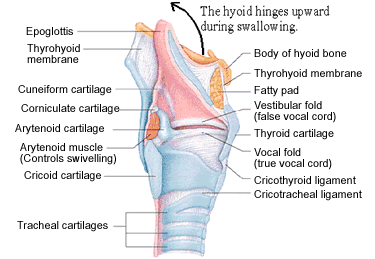
    • Epiglottis
    • Thyroid cartilage
    • Cricoid cartilage
    • Arytenoids
  2. Function
    • Open valve of respiration
    • Protects trachea and bronchial tree during deglutition
    • Coughing